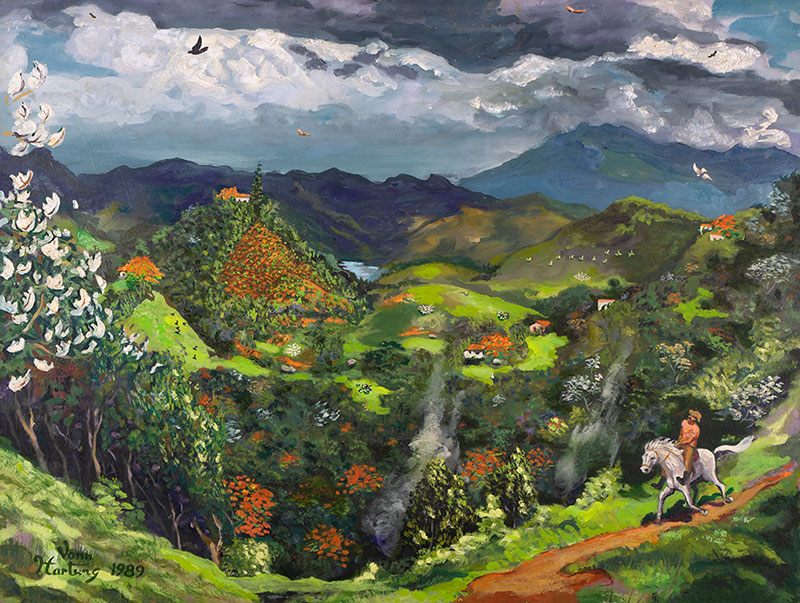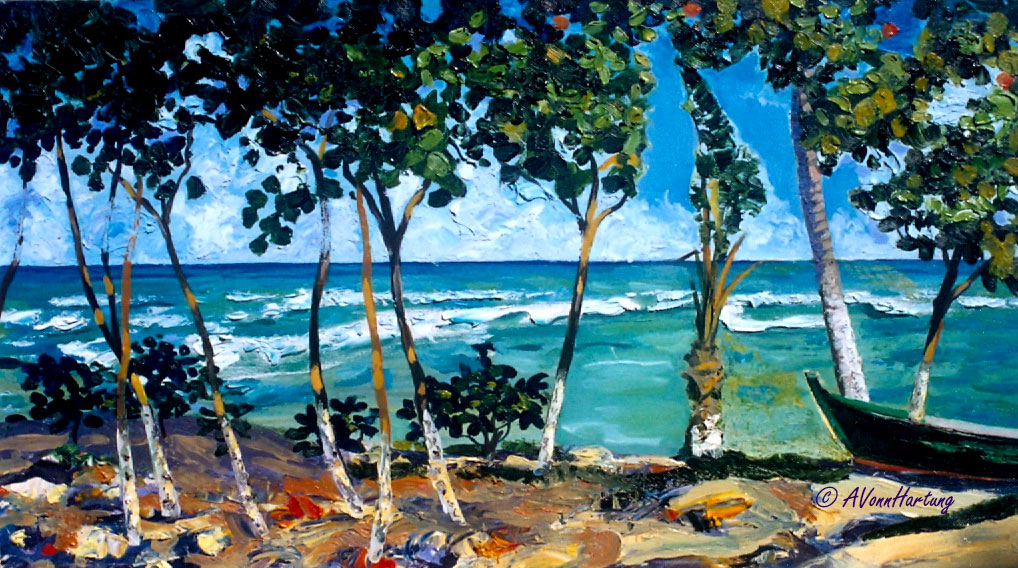
rural Puerto Rico

To Save the Whale

To Save the Whale

A tapestry

(Scroll down for Spanish text)


Commentary by A.Vonn Hartung

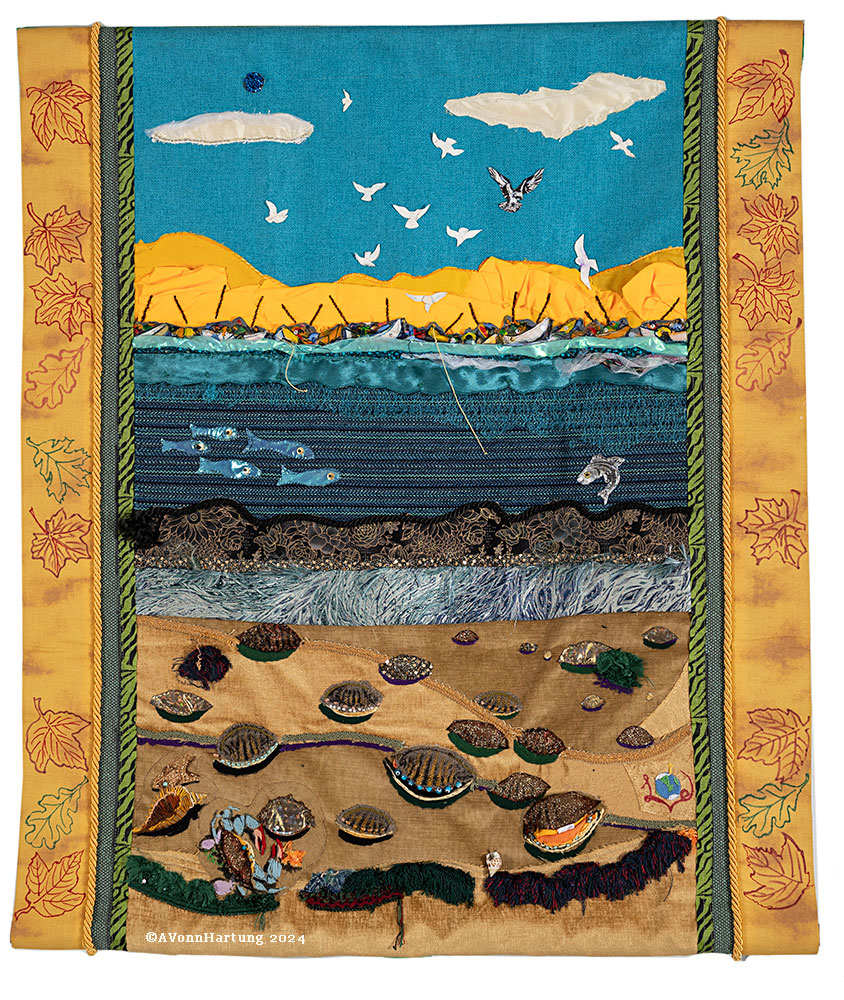
 This tapestry, To Save the Whale (45 x 76 inches), depicts the Integral connection between the Sky and the Sea, and what lives in and between in Nature, including you and me, inspired by the magnificent nature of Puerto Rico.
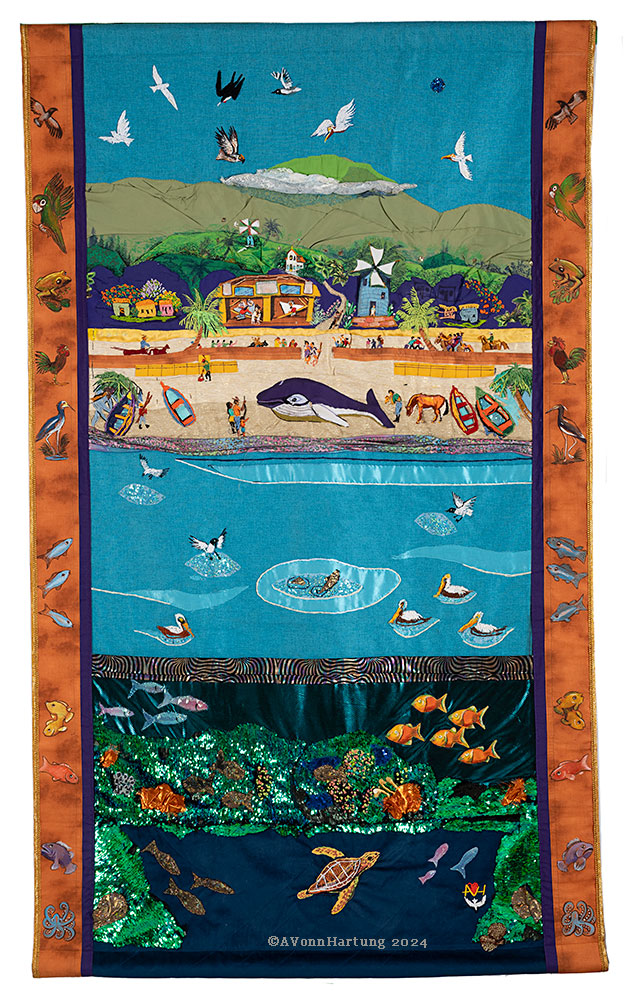
A tapestry by A.Vonn Hartung (45 x 76 inches), showing the beauty of nature in Puerto Rico; depicts the Integral connection between the Sky and the Sea, and what lives in and between in Nature, including you and me.
       To Save the Whale (45 x 76 inches)


The border in this work is lined with a golden braid, a symbol of the “Goldilocks zone,” which climate scientists describe as the temperature zone where life exists, within which our human ancestors have lived for over 1.05 million years. It is the Zone of “Our Common Home” as Pope Francis writes in his Encyclical (Laudato Sí)

 This tapestry is a vision of a better world, one in which we connect and live in harmony with nature.
Living in harmony with Nature is a life-sustaining mode of existence, in rhythm with our revolving planet Earth, marked by love and respect for all creation.

What we love, we will save!

 Solar panels dot the landscape, and windmills are symbols of wind generators.

 We see the villagers’ concern for the beached whale, a symbol of all endangered species, including ourselves, along with their respect and concern for the sea turtle and other forms of life at the bottom of the reef.

The villagers are being called to gather to save the whale.  As they approach the beach, we can see that they are carrying the necessary tools and equipment. We also see the infrastructure of their village with the wind generators and solar panels on top of each building, and the sail shop where the handmade sails are fabricated that will catch the wind and turn the generators that will produce the electricity and the physical mechanical power to run their mills that will help feed the village.

Throughout the landscape, we can see the reflection of light from the solar panels.  It is a village of fishermen and women, as well as agricultural workers, that creates a natural rhythm and harmonious connection with the land and the sea. Above the town, we see various bird species.      

In the lagoon, we see schools of fish breaking the surface as pelicans and seagulls dive to feed on them. Below the lagoon lies the reef, with its myriad coral forms and the organic living colonies that provide habitat for many sea life, contributing to the food chain. Below, at a deeper level of the reef, we see our endangered sea turtle rising, awakening us to the challenges we face in protecting Nature for ourselves and future generations.

If we open our eyes to the wisdom inherent in nature’s beauty, we may come to understand that we are the crucial link to a better, healthier future!

 We cannot possess life, but only live it in harmony, and pass it along to future generations!

Photo by John Betancourt

****************************************

 
Español

Para Salvar a la Ballena

Un tapiz

Comentario de A. Vonn Hartung


Este tapiz, Para Salvar a la Ballena (45 x 76 inches), representa la conexión integral entre el Cielo y el Mar, y lo que habita en la Naturaleza, incluyéndonos a ti y a mí, Inspirado en la magnífica naturaleza de Puerto Rico.

El borde de esta obra está revestido con una trenza dorada, símbolo de la “zona Ricitos de Oro” (Goldilocks Zone), que los climatólogos describen como la zona de temperatura donde existe vida, dentro de la cual nuestros antepasados ​​humanos han vivido durante más de 1,05 millones de años. Es la Zona de “Nuestra Casa Común”, como escribe el Papa Francisco en su Encíclica Laudato Si’.z es una visión de un mundo mejor a medida que nos conectamos y vivimos en armonía con la naturaleza. Vivir en armonía con la Naturaleza es un modo de existencia que sustenta la vida, en ritmo con nuestro planeta Tierra en movimiento, marcado por el amor y el respeto por toda la creación.

¡Lo que amamos lo salvamos!

Los paneles solares salpican el paisaje y los molinos de viento son símbolos de los generadores eólicos.

Vemos la preocupación de los aldeanos por la ballena varada, símbolo de todas las especies en peligro de extinción, incluidos nosotros mismos, junto con su respeto y preocupación por la tortuga marina y otras formas de vida en el fondo del arrecife.

Se llama a los aldeanos a reunirse para salvar a la ballena. Al acercarnos a la playa, vemos que llevan las herramientas y el equipo que necesitarán. También vemos la infraestructura de su pueblo, con los generadores eólicos y paneles solares en la parte superior de cada edificio, y el taller de velas, donde se fabrican las velas hechas a mano que atraparán el viento y harán girar los generadores, que producirán electricidad y energía mecánica para hacer funcionar sus molinos, que ayudarán a alimentar al pueblo.

A lo largo del paisaje, podemos ver el reflejo de la luz de los paneles solares. Es una aldea de pescadores y mujeres, así como de trabajadores agrícolas, que crea un ritmo natural y una conexión armoniosa con la tierra y el mar. Sobre la aldea, observamos diversas especies de aves.

En la laguna, vemos evidencia de bancos de peces que emergen a la superficie mientras los pelícanos y las gaviotas se zambullen para alimentarse de ellos. Debajo de la laguna, vemos el arrecife, con su infinidad de formas de coral y las colonias orgánicas que proporcionan hábitat a numerosas especies marinas que contribuyen a la cadena trófica. Abajo, a un nivel más profundo del arrecife, vemos nuestra tortuga marina en peligro de extinción, elevándose para despertarnos a los desafíos que enfrentamos al trabajar para proteger la Naturaleza para nosotros y las generaciones futuras.

Si abrimos los ojos a la sabiduría inherente a la belleza de la naturaleza, podremos comprender que somos el vínculo crucial hacia un futuro mejor y más saludable.

¡No podemos poseer la vida, sino sólo vivirla en armonía y transmitirla a las generaciones futuras!

Foto por John Betancourt
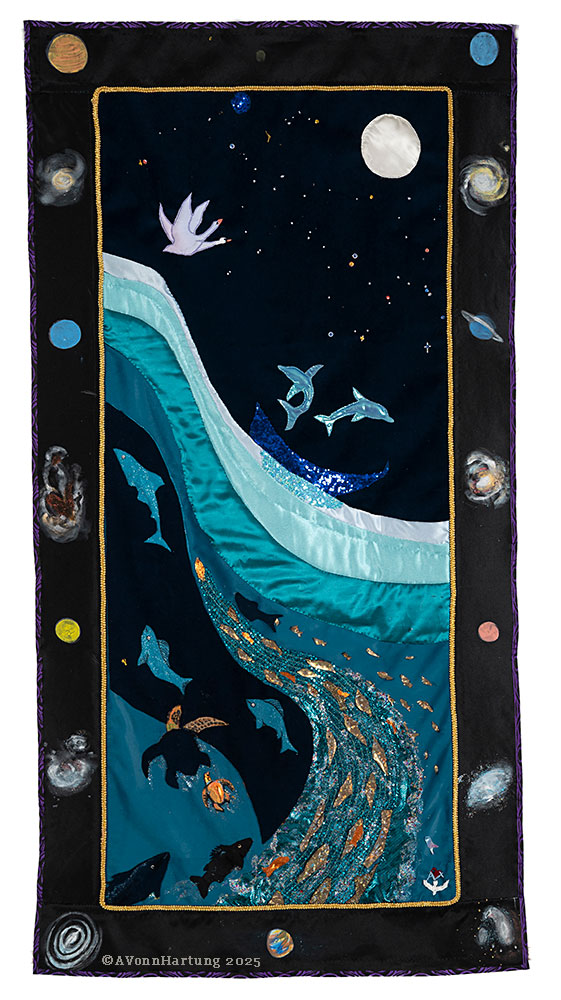
 

Tapestries by A.Vonn Hartung

Tapestries by A.Vonn Hartung

(Scroll down for Spanish text)

A tapestry by A.Vonn Hartung—"Light and Life from Beyond" (36 x 70 inches)
  Light and Life from Beyond (36 x 70 inches)


I conceived these tapestries to balance my art exhibit entitled Laudato Si, the title of Pope Francis’s encyclical.  He wrote it in everyday language for everyone in the world, not just fellow Christians. With the support of friends and our pastor, Jesuit priest Father Ron Gonzales of San Ignacio Church here in Guaynabo, Puerto Rico, we organized an exhibit for the forty days of Lent in 2023.

The exhibit was well-received. I believe it brought about a lot of discernment concerning the possibilities of the futures we face.

The issue of Climate Change is a complex subject and, therefore, challenging to discuss. However, it is something that we need to consider and confront. I believe that presenting it to the public is a positive step. We must work together to overcome the challenges of creating a healthy future!

The results, whether we act or not, will be forced upon us! And the consequences will be left not only with us but also with our progeny, our grandchildren, and their children, and future generations.

For these reasons, and after much thought, I decided to balance future exhibits with tapestries (a form of soft sculpture) in collaboration with my wife, to bring forth and emphasize the beauty, balance, and harmony in nature. They are largely hand-sewn and embroidered.

A tapestry by A.Vonn Hartung (45 x 76 inches), showing the beauty of nature in Puerto Rico; depicts the Integral connection between the Sky and the Sea, and what lives in and between in Nature, including you and me.
        To Save the Whale (45 x 76 inches)


Tapestry by A.Vonn Hartung "Niantic River Scalloping" (38 x 44 inches)
          Niantic River Scalloping (38 x 44 inches)

Español

Concebí estos tapices para equilibrar mi exhibición de arte titulada Laudato Si, el título de la encíclica del Papa Francisco. Escribió en un lenguaje cotidiano para todos en el mundo, no sólo para sus hermanos cristianos. Con el apoyo de amigos y nuestro párroco, el sacerdote jesuita Padre Ron Gonzales de la Iglesia de San Ignacio aquí en Guaynabo, Puerto Rico, organizamos una exposición para los cuarenta días de Cuaresma de 2023.

La exposición fue bien recibida. Creo que generó mucho discernimiento respecto a las posibilidades del futuro que enfrentamos.

La cuestión del cambio climático es un tema complejo y, por tanto, desafiante para discutir. Sin embargo, es algo que debemos considerar y afrontar. Pienso que plantearlo a la gente es un paso positivo. ¡Debemos trabajar juntos para superar los desafíos de crear un futuro saludable!

¡Los resultados, ya sea que actuemos o no, nos serán impuestos! Y las consecuencias no las sufriremos sólo nosotros, sino también nuestra descendencia, nuestros nietos, sus hijos y las generaciones futuras.

Por estas razones, y después de mucho pensarlo, decidí equilibrar futuras exhibiciones con tapices (una forma de escultura blanda) en colaboración con mi esposa, para resaltar y enfatizar la belleza, el equilibrio y la armonía de la naturaleza. En gran parte están cosidos y bordados a mano.

Fotos por John Betancourt


Exhibit—Toques de Fe

Exhibit

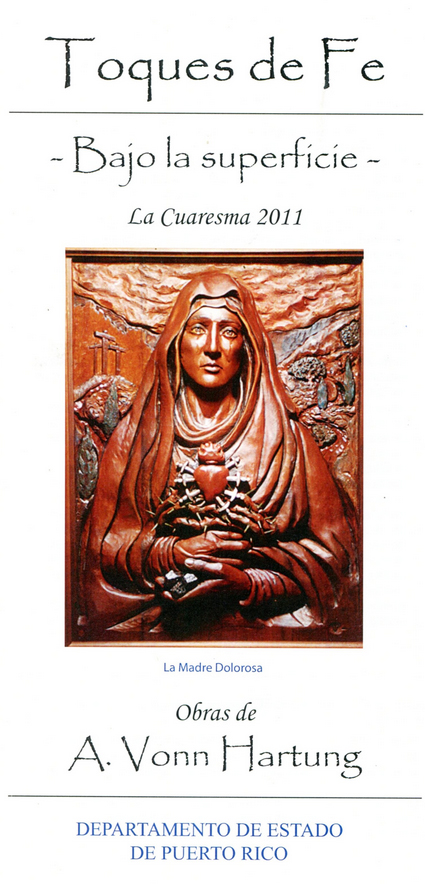
Toques de Fe: bajo la superficie

Obras de A.Vonn Hartung

Departamento del Estado

San Juan, Puerto Rico

31 marzo a 21 abril 2011

(durante Cuaresma)

Art exhibit by A.Vonn Hartung at the State Department, San Juan Puerto Rico in 2011

Reflexiones del artista

on his exhibit “Toques de fe”

Toques de fe” al igual que en las cuevas del sur de Europa de hace unos 30,000 años, expresan el lenguaje humano del cuento a través del arte y el simbolismo.

Los primeros artistas expresaron lo que era más significativo para ellos, ya sea para exaltar, aplacar o comunicarse con poderes más allá de su control o simplemente para celebrar la necesidad humana de expresión. Aunque pueden surgir controversias acerca de la corrección y legitimidad y aceptación de la expresión colectiva e individual, es y será siempre central en una sociedad vibrante,libre y atenta a las necesidades humanas.

 Mientras la humanidad pondera y experimenta con sus propios significados y relevancia, se nos confronta con la pregunta última y básica de quiénes somos, de dónde venimos y hacia dónde vamos, “D’où Venons-nous / Que Sommes-nous / Où Allons-nous”; tal como Paul Gauguin tan punzanamente planteara este misterio de la existencia en su pintura del siglo 19 del mismo título.

Aunque algunos de los “Toques” son eclesiásticos (encargados por la iglesia), muchos de ellos son revelaciones propias recibidas en la oración y en el acto de su creación. Es posible que Dios hiciera que el significado de la vida fuera paradójico por diseño, pero nos regaló la fe para que obráramos la gracia al encontrar el significado y la alegría en la seguridad que da el conocer su amor y promesa de salvación en su hijo Cristo Jesús.

“Toques de fe” explora esas imágenes de la fe tal como yo las entiendo e intento hacerlas visibles en sus manifestaciones interiores y externas. Cedo mi lugar a mis propias obras para alcanzar entendimiento, ya que ellas comunican de manera universal a través del lenguaje del arte y el simbolismo. Con la esperanza de que abra ventanas y puertas hacia esa luz brillante que he encontrado por medio de la fe en la belleza de las imágenes que hablan el lenguaje del espíritu.

Me parece muy apropiado ponderar estos “Toques de fe: bajo la superficie” durante esta época crucial en nuestra búsqueda de significado y realización.

*****************************************

Reflections by the artist

on his exhibit “Toques de fe”

“Toques de Fe” (Touches of faith), as in the caves of southern Europe some 30,000 years ago, express the human language of storytelling through art and symbolism.

Early artists expressed what was most meaningful to them, whether to exalt, appease, or communicate with powers beyond their control, or to celebrate the human need for expression. While controversies may arise about propriety, legitimacy, and acceptance of collective and individual expression, it is and always will be central to a vibrant, free, and responsive society.

As humanity ponders and experiments with its own meanings and relevance, we are confronted with the ultimate and fundamental question of who we are, where we came from, and where we are going, “D’où Venons-nous / Que Sommes-nous / Où Allons-nous”; just as Paul Gauguin so poignantly posed this mystery of existence in his 19th-century painting of the same title.

Although some of the “Toques” are ecclesiastical (commissioned by the church), many of them are self-revelations received in prayer and in the act of their creation. God may have designed the meaning of life to be paradoxical, but he gave us faith to work with grace by finding meaning and joy in the security that comes from knowing his love and promise of salvation in his Son, Jesus Christ.

“Toques de Fe” explores these images of faith as I understand them and attempts to make them visible in their inner and outer manifestations. I surrender to my own works, allowing them to achieve understanding, as they communicate universally through the language of art and symbolism. In the hope that it will open windows and doors to that brilliant light, I have found faith in the beauty of images that speak the language of the spirit.

I find it very appropriate to ponder these “Touches of Faith: Beneath the Surface” during this crucial time in our search for meaning and fulfillment.

Exhibit Catalog

ExhibitCatalog_Toques de Fe 2011


Apertura de la Exposición Toques de Fe, presentación por Padre Jorge Santiago Cartagena SDB, Dept del Estado, San Juan 2011 ENGLISH TRANSLATION_P.Jorge Intro_Toques de Fe exhibit


Aún hay Magos

Aun hay MagosAun hay Magos / There are still Wise Men.

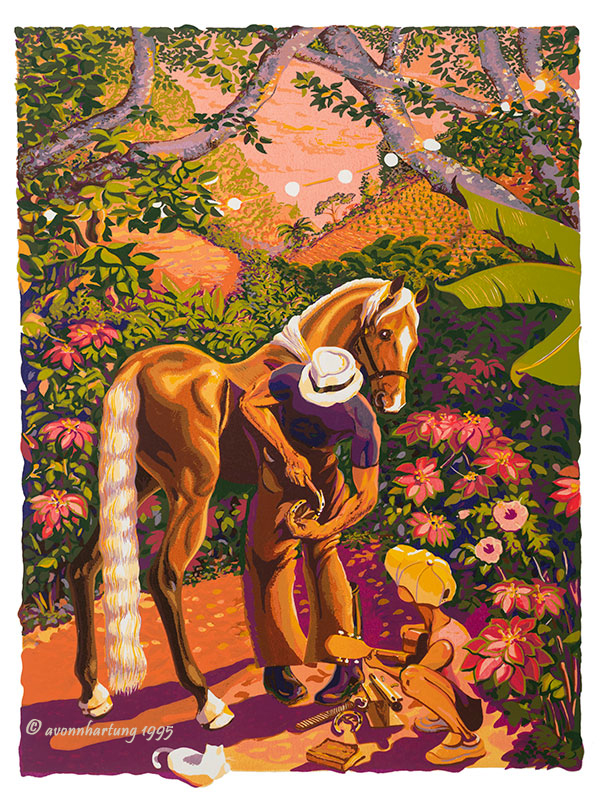
An original limited edition serigraph, by A.Vonn Hartung, depicting the harmony of work, art, and nature, and the celebration of hope in the spirit of Christmas. As the day moves into the night, preparation is made to share in the tradition of Three Kings Day, still honored here in Puerto Rico, of bringing gifts and good cheer.

Serigrafía original de edición limitada, de A. Vonn Hartung, que representa la armonía del trabajo, el arte y la naturaleza, y la celebración de la esperanza en el espíritu de la Navidad. A medida que el día avanza hacia la noche, se hacen preparativos para compartir la tradición del Día de los Reyes Magos que todavía se honra aquí en Puerto Rico, de traer regalos y buen ánimo.

Buy a giclee print of this serigraph

Peace in the Valley

Peace in the Valley, a painting by A.Vonn Hartung
Peace in the valley

Original Oil Painting by A. Vonn Hartung.

(Scroll down for Spanish text)

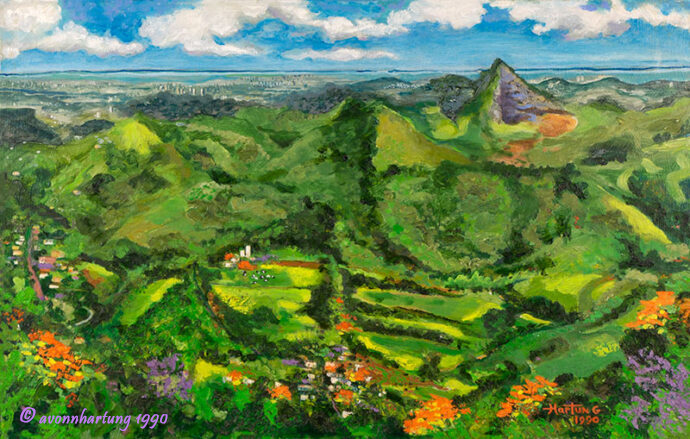
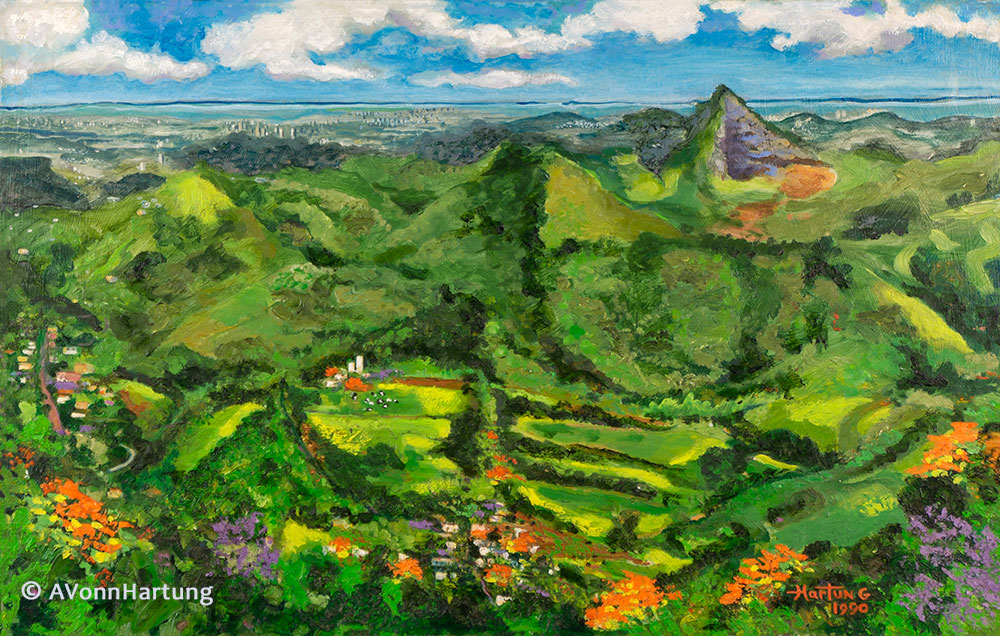
“Peace in the Valley” is a mountaintop view of Puerto Rico, looking North towards the Atlantic Ocean; a section of San Juan is visible in the distance at the upper left, and a cement quarry to the right. Snuggled in the middle is a valley farm with its silos and farmhouse in one of the various pastures protected by the surrounding hills.

Two small villages populate this pastoral scene. The beautiful fiery reds of Flamboyans and the passionate purples of the Reina de las Flores trees complete a typical landscape just a short distance inland from the sparkling beaches of Puerto Rico.

Puerto Rico’s topography is characterized by three main regions: a central mountainous backbone (the Cordillera Central), extensive coastal plains, and a unique northern karst region with dramatic limestone features. The island is primarily hilly and mountainous, with Cerro de Punta being the highest peak. It features diverse landscapes, including a trench to its north, sandy beaches, mangrove swamps, and smaller offshore islands.
 
Puerto Rico lies at the boundary between the Caribbean and North American plates. This means that it is currently being deformed by the tectonic stresses caused by the interaction of these plates.
These stresses may cause earthquakes and tsunamis. These seismic events, along with landslides, represent some of the most dangerous geologic hazards in the island and in the northeastern Caribbean.
 
Lying about 75 miles north of Puerto Rico in the Atlantic Ocean at the boundary between the Caribbean and North American plates is the Puerto Rico Trench, the largest and deepest trench in the Atlantic.
The trench is 1,090 miles long and about 60 miles wide. At its deepest point, known as the Milwaukee Depth, it is 27,493 feet deep, or about 5.21 miles.
 

The story behind the painting

This is an oil painting (14 x 22 inches) I did from my neighbor’s balcony, two houses from ours, looking down into the valley. You can see the Atlantic Ocean in the far distance. The farm that you see in the center is named Finca Elena, meaning Elena’s Farm, and it has now been developed into half-million-dollar homes. The pyramid-like excavation visible to the upper right is an ongoing quarry where they pulverize the rock to produce cement.

 At the time I painted the picture, we were struggling against a waste management company called BFI (Browning-Ferris Industries), which wanted to convert the farm into a regional landfill.

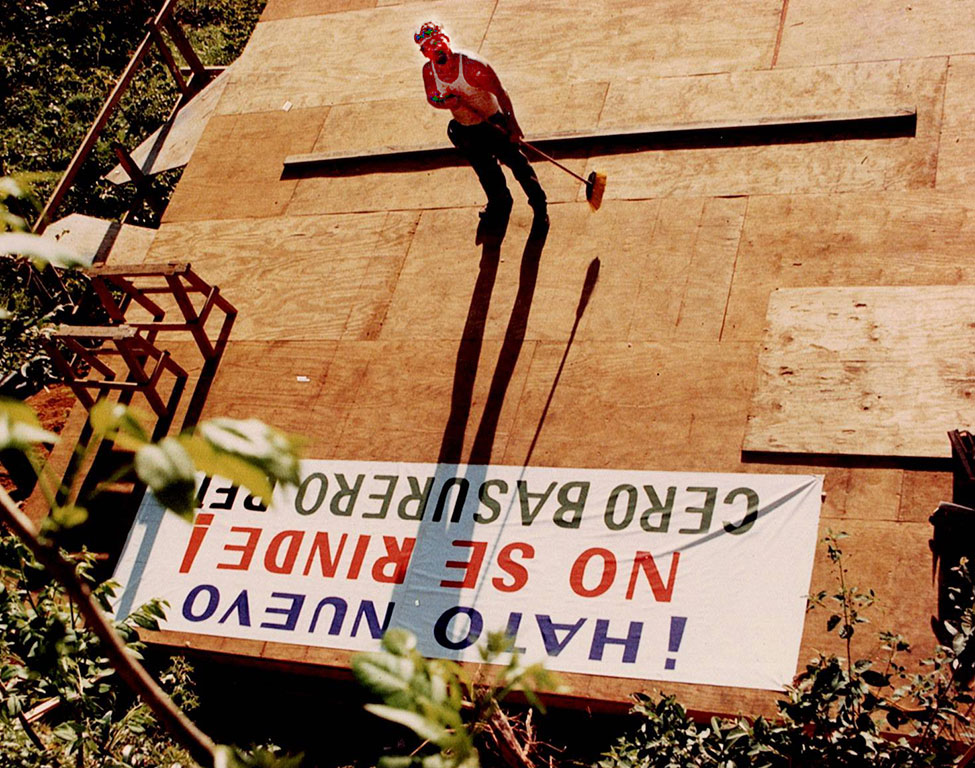
 Patty and I had just started building our house, and we only had the floor laid down, with no walls yet; the first painting I did in it was on the floor.

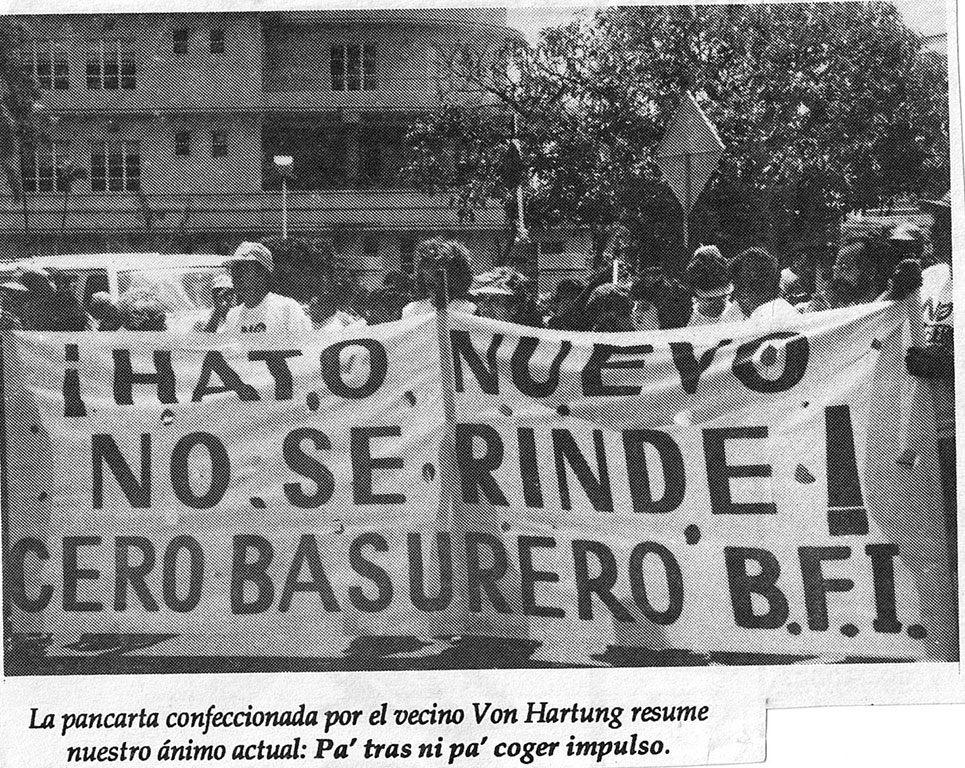
I printed a huge banner, “No se Rinde! Cero Basurero BFI (Don’t Give up! Zero dump BFI) for the fight against BFI. This is how we met all our neighbors, in a struggle that lasted over 1 ½ years.

Peace in the Valley—a banner to save the farm Finca Elena         Peace in the Valley—marching with the banner to save the farm, Finca Elena

 BFI tried to make us look minor and incompetent, brought in scientists from other parts of the world, France, the UK, and one guy even wore a turban. Our defense was a logical one, given the presence of seven natural springs in the valley, which is the origin of the Guaynabo River. Their defense was that they proposed lining the entire valley with rubber.

 We finally prevailed, and now it is filling up with half-million-dollar homes.


This was the theme song of our struggle against BFI. It was blasted from loudspeakers mounted on the lead car during every protest event.

La Muralla” by Haciendo Punto En Otro Son

https://youtu.be/H68kVhSLbE4?si=FZHBXu9hRG6DNySz


Buy a giclee print of this painting

******************************

Español

Peace in the Valley / Paz en el Valle


Peace in the Valley es una vista de la cima de una montaña de Puerto Rico, mirando al norte hacia el Océano Atlántico; una sección de San Juan es visible en la distancia en la parte superior izquierda y una cantera de cemento a la derecha. Acurrucada en el medio hay una granja en el valle con sus silos y una casa de campo en uno de los varios pastos protegidos por las colinas circundantes.

Dos pequeños pueblos pueblan esta escena pastoral. Los hermosos rojos ardientes de los Flamboyanes y los apasionados púrpuras de los árboles Reina de las Flores completan un paisaje típico a poca distancia tierra adentro de las resplandecientes playas de Puerto Rico.

La topografía de Puerto Rico se caracteriza por tres regiones principales: una cordillera montañosa central (la Cordillera Central), amplias llanuras costeras y una singular región kárstica en el norte, con impresionantes formaciones de piedra caliza. La isla es principalmente montañosa, siendo el Cerro de Punta el pico más alto. Presenta diversos paisajes, incluidos una fosa al norte, playas de arena, manglares e islas más pequeñas en alta mar.

Puerto Rico se encuentra en la zona de contacto entre la placa del Caribe y la placa norteamericana. Esto significa que actualmente está siendo deformada por las tensiones tectónicas provocadas por la interacción de estas placas.

Estas tensiones pueden provocar terremotos y tsunamis. Estos eventos sísmicos, junto con los deslizamientos de tierra, representan algunos de los riesgos geológicos más peligrosos en la isla y en el noreste del Caribe.

Ubicada a unas 75 millas al norte de Puerto Rico en el océano Atlántico, en el límite entre las placas del Caribe y América del Norte, se encuentra la Fosa de Puerto Rico, la fosa más grande y profunda del Atlántico.

La fosa tiene 1.090 millas de largo y aproximadamente 60 millas de ancho. En su punto más profundo, conocido como la profundidad de Milwaukee, tiene una profundidad de 27.493 pies, o aproximadamente 5,21 millas.

La historia detrás de la pintura

Esta es una pintura al óleo (14 x 22 pulgadas) que pinté desde el balcón de mi vecino, a dos casas de la nuestra, con vistas al valle. Se puede ver el océano Atlántico a lo lejos. La finca que se ve en el centro se llama Finca Elena, y ahora se ha convertido en casas de medio millón de dólares. La excavación en forma de pirámide, visible arriba a la derecha, es una cantera en funcionamiento donde pulverizan la roca para producir cemento.

En el momento en que pinté el cuadro, estábamos luchando contra una empresa de gestión de residuos llamada BFI (Browning-Ferris Industries), que quería convertir la granja en un vertedero regional.

Patty y yo acabábamos de empezar a construir nuestra casa, y solo teníamos el suelo, sin paredes; El primer cuadro que hice allí fue en el suelo.

Imprimí una pancarta enorme: “¡No se rinde! Cero Basurero BFI, para la lucha contra el BFI. Así conocimos a todos nuestros vecinos, en una lucha que duró más de un año y medio.


El BFI intentó hacernos quedar como insignificantes e incompetentes, trajo científicos de otras partes del mundo, Francia, el Reino Unido, y un hombre incluso llevaba turbante. Nuestra defensa era lógica, ya que había siete manantiales naturales en el valle, y este valle es el origen del río Guaynabo. Su defensa fue que proponían revestir todo el valle con caucho.

Finalmente prevalecimos, y ahora se está llenando de casas de medio millón de dólares.


Esta fue la canción principal de nuestra lucha contra el BFI. Se escuchaba a todo volumen desde los altavoces del carro de adelante durante cada acto de protesta.

“La Muralla” de Haciendo Punto En Otro Son

https://youtu.be/H68kVhSLbE4?si=FZHBXu9hRG6DNySz


El Yunque, protector from hurricanes

El Yunque, protector from hurricanesEl Yunque, protector from hurricanes  

   (Scroll down for Spanish text)       

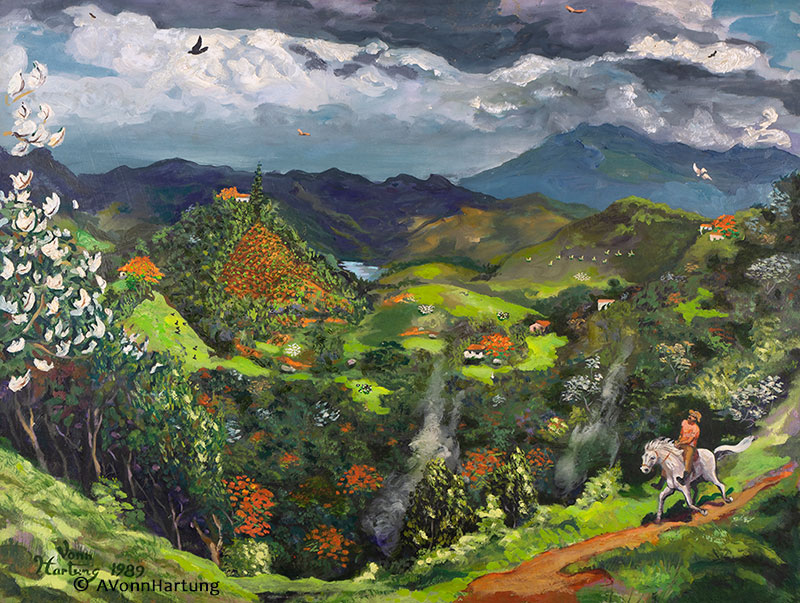
 I painted this work the afternoon that Hurricane Hugo was approaching Puerto Rico.  I painted until the wind blew the painting off my easel a second time. It was a horrendous hurricane that completely wiped out all the trees. You can see the mountain El Yunque in the distance, where the Taino Indians believed their gods lived and protected the island from hurricanes. It is one of the most visited tourist sites in Puerto Rico.

Located in Puerto Rico’s Northeast Region, El Yunque National Forest is the only tropical rainforest within the national forest system. It extends through eight municipalities: Río Grande, Luquillo, Canóvanas, Fajardo, Naguabo, Ceiba, Las Piedras and Juncos. At nearly 29,000 acres, it is one of the smallest in size, yet one of the most biologically diverse.

Ample rainfall (over 20 feet a year in some areas, or an average of 120 inches of water up to 240 inches of water a year) creates a jungle-like setting—lush foliage, crags, waterfalls, and rivers are a frequent sight. The forest has many trails from which the jungle-like territory’s flora and fauna can be appreciated. El Yunque forest is also renowned for its unique Taíno petroglyphs. It is said that indigenous people believed that El Yunque was the throne of their chief god Yúcahu, so that it is the Caribbean equivalent to Mount Olympus in Greek mythology.

The forest is home to over 200 species of trees and plants, 16 of which are endemic to the forest.

**********************

Español

El Yunque, protector de huracanes


Pinté esta obra la tarde en que el huracán Hugo se acercaba a la isla. Pinté hasta que el viento sopló la pintura de mi caballete por segunda vez. Fue un huracán horrible y arrasó por completo con todos los árboles. Puedes ver la montaña El Yunque a lo lejos, donde los indios taínos creían que sus dioses vivían y protegían la isla de los huracanes. Es uno de los sitios turísticos más visitados de Puerto Rico.

Ubicado en la Región Noreste de Puerto Rico, el Bosque Nacional El Yunque es el único bosque tropical lluvioso dentro del sistema forestal nacional. Se extiende por ocho municipios: Río Grande, Luquillo, Canóvanas, Fajardo, Naguabo, Ceiba, Las Piedras y Juncos. Con casi 29.000 acres, es uno de los más pequeños en tamaño, pero uno de los de mayor diversidad biológica.

Las abundantes precipitaciones (más de 20 pies al año en algunas zonas, o un promedio de 120 pulgadas de agua hasta 240 pulgadas de agua al año) crean un entorno similar a una jungla: follaje exuberante, riscos, cascadas y ríos son una vista frecuente. El bosque cuenta con numerosos senderos que permiten apreciar la flora y fauna de este territorio tropical. El bosque de El Yunque también es famoso por sus singulares petroglifos taínos. Se dice que los indígenas creían que El Yunque era el trono de su dios principal, Yúcahu, por lo que podría considerarse el equivalente caribeño del Monte Olimpo en la mitología griega.

El bosque alberga más de 200 especies de árboles y plantas, de las cuales 16 son endémicas de esta zona.

Buy a giclee print of this painting